Why Every Construction Firm Needs an Offboarding Process
Construction companies spend significant time managing job sites, subcontractors, equipment, schedules, safety programs, and project budgets. Yet one of the most overlooked operational risks often occurs after an employee leaves the company.
Many construction owners assume that once an employee turns in their keys and leaves the job site, the separation is complete. In reality, former employees frequently retain access to business systems, email accounts, vendor portals, mobile devices, and project information long after their employment ends.
For small and midsize construction firms throughout Eugene, Springfield, Lane County, and the broader Willamette Valley, a structured employee offboarding process is no longer just an HR function. It is an important part of cybersecurity, operational continuity, and risk management.
As identity-based attacks continue to grow, managing access rights has become one of the most effective ways to reduce business risk. A documented offboarding process helps ensure that employees leave the organization without taking access, data, or business disruptions with them.
Why Construction Firms Face Unique Offboarding Challenges
Construction businesses often operate differently than traditional office environments.
Project managers work remotely. Superintendents access cloud systems from jobsites. Foremen use mobile devices. Administrative staff manage contracts, accounting systems, and vendor relationships. External consultants, subcontractors, and suppliers may also have access to shared platforms.
Over time, access becomes spread across dozens of systems, including:
- Email accounts
- Project management platforms
- Accounting software
- Bid management systems
- Vendor portals
- Cloud storage
- Mobile applications
- Remote access tools
Without a formal process, it becomes easy for one or more accounts to remain active long after an employee departs.
The result is often not malicious intent. More commonly, it is simply a lack of visibility into every system a departing employee used.
Common Access Gaps That Get Missed
One of the biggest offboarding risks is incomplete account removal.
Many organizations remember to disable a primary user account but overlook secondary systems that employees accessed during their role.
Common examples include:
- Shared project management platforms
- Estimating software
- Time tracking applications
- Vendor ordering systems
- Safety and compliance portals
- Fleet management tools
- Remote desktop access
- Cloud storage accounts
Construction firms often grow quickly, adding software as operational needs arise. Years later, nobody remembers which employees still have permissions in older systems.
A comprehensive offboarding checklist should identify every business application tied to an employee and verify that access has been removed.
This also creates a cleaner security posture and reduces potential cyber insurance concerns if an incident occurs.
Email Accounts Create Significant Business Risk
Email is often the most valuable business system employees use.
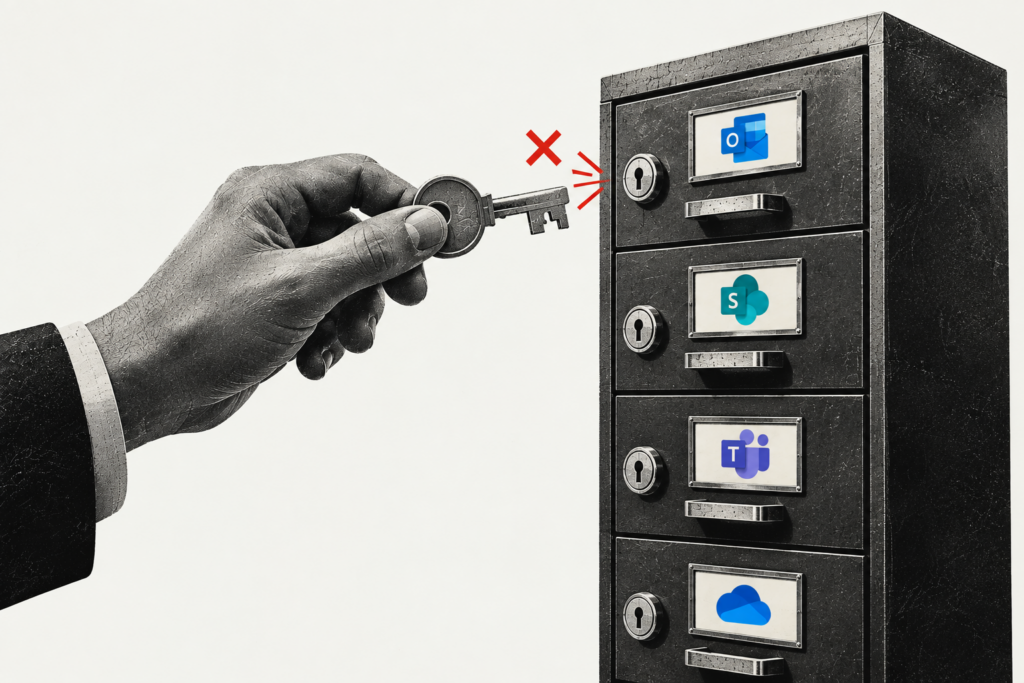
A former employee who still has access to their Microsoft 365 account may continue receiving:
- Client communications
- Vendor correspondence
- Project updates
- Contract documents
- Financial information
- Internal business discussions
Even if no malicious activity occurs, important business communications can be missed if accounts are improperly managed.
Construction companies frequently rely on long-term customer relationships and active projects involving multiple stakeholders. Losing visibility into email communications can lead to delayed responses, missed approvals, scheduling problems, and billing confusion.
When employees leave, organizations should have a documented process to:
- Disable Microsoft 365 access promptly
- Preserve business records when necessary
- Redirect critical communications
- Review mailbox ownership
- Update shared distribution groups
This ensures project communication continues without interruption while protecting company information.
Vendor Access Often Falls Through the Cracks
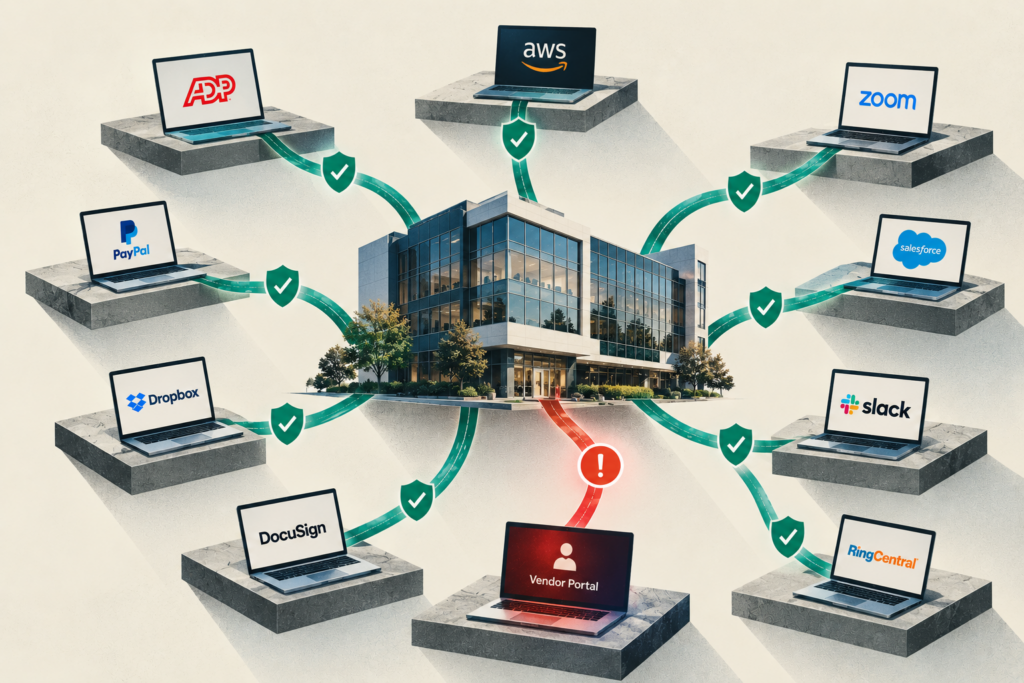
Many construction organizations focus on internal systems while overlooking vendor and partner platforms.
A project manager may have direct access to:
- Material supplier portals
- Equipment rental systems
- Utility company accounts
- Municipal permitting systems
- Construction management platforms
- Engineering collaboration portals
These external accounts are frequently outside the visibility of internal IT teams.
If access is not reviewed during offboarding, former employees may continue to hold permissions within systems that affect purchasing decisions, project documentation, or contractual information.
Vendor access reviews should be included in every employee departure process.
Organizations should maintain an inventory of critical business systems and identify who is responsible for approving, modifying, and removing permissions when staffing changes occur.
Mobile Devices Require Special Attention
Construction is increasingly mobile.
Employees often perform business activities using:
- Company smartphones
- Tablets
- Laptops
- Shared field devices
- Personal devices used for work
These devices may contain:
- Project files
- Customer contacts
- Site photographs
- Email data
- Authentication applications
- Stored passwords
When an employee leaves, recovering devices and removing business data should be handled through a documented procedure.
The process should verify:
- Device return
- Account sign-out
- Removal of company applications
- Security policy compliance
- Data preservation where required
Personal devices deserve particular attention. Many organizations allow access to company resources from privately owned phones and tablets. Without proper oversight, business information may remain accessible after employment ends.
A clear offboarding process helps ensure data leaves with the company, not the employee.
Building an Effective Offboarding Checklist
A successful employee offboarding program does not need to be overly complex. It simply needs to be consistent.
Most construction firms should include the following elements:
1. Notify Stakeholders
Ensure HR, operations, management, and IT support teams know the employee’s departure date and responsibilities.
2. Document System Access
Create a complete inventory of systems, applications, vendor portals, and accounts the individual uses.
3. Remove User Permissions
Disable accounts according to company policy and verify removal from all critical business systems.
4. Secure Email and Communication Channels
Review Microsoft 365 access, shared mailboxes, distribution lists, and project communications.
5. Collect Company Assets
Retrieve keys, badges, laptops, tablets, phones, and any other company-owned equipment.
6. Review Mobile Access
Ensure company data is removed from mobile devices and authentication applications.
7. Reassign Responsibilities
Transfer project ownership, vendor relationships, customer contacts, and ongoing responsibilities.
8. Maintain Documentation
Keep records of completed offboarding actions for operational accountability and compliance purposes.
Offboarding Is a Business Process, Not Just an IT Task
Many construction companies view employee departures primarily as an HR matter. In practice, offboarding affects cybersecurity, operations, project management, client service, compliance, and business continuity.
A well-executed offboarding process reduces the likelihood of unauthorized access, protects company information, preserves operational continuity, and ensures projects continue smoothly after staffing changes.
For construction firms managing multiple projects, mobile workforces, and numerous third-party relationships, identity security should be treated with the same discipline applied to financial controls, safety programs, and project oversight.
Business leaders should periodically review how employee departures are handled and verify that access removal procedures are consistent across the organization. A security assessment or IT governance review can often uncover gaps that have accumulated over time.
Emerald Technology Group works with construction companies throughout Eugene, Springfield, Lane County, and the Willamette Valley to evaluate user permissions, strengthen Microsoft 365 security, improve employee offboarding processes, and build practical cybersecurity programs that support day-to-day operations. The goal is not simply to remove access when employees leave, but to ensure the business remains secure, organized, and resilient as it grows.
What to read next
Back to Blogs