The Hidden Compliance Risks of Using Personal Phones for Work
Many compliance issues begin with well-intentioned convenience.
An employee responds to a client email while waiting in line for coffee. A healthcare provider checks a secure message from a personal phone after hours. A nonprofit executive approves a grant document from a mobile app while traveling between meetings.
None of these actions seem risky. In fact, they often appear to improve responsiveness and productivity.
Yet for healthcare organizations, law firms, nonprofits, and other professional service organizations throughout Eugene, Springfield, and the Willamette Valley, some of the most significant compliance and data governance issues now originate from personal mobile devices.
Mobile access has evolved from a convenience into a primary business workflow. As a result, organizations are increasingly discovering that their compliance responsibilities extend well beyond laptops, servers, and office networks. Personal phones may now hold sensitive business information, client communications, financial records, and regulated data without leadership fully realizing it.
The Reality of BYOD
“Bring Your Own Device” (BYOD) policies have become commonplace because they offer practical advantages. Employees prefer using a familiar device. Organizations may reduce hardware costs. Smaller businesses with limited IT resources often find BYOD operationally attractive.
However, the same flexibility that makes BYOD convenient also introduces new governance challenges.
According to guidance from the National Institute of Standards and Technology (NIST), personal mobile devices create unique security and privacy concerns because organizations must protect business data while respecting employee privacy rights. BYOD environments introduce risks that do not exist when devices are fully managed and owned by the organization.
For healthcare practices, legal professionals, and nonprofit organizations handling sensitive information, the challenge is not simply securing the phone itself. The challenge is understanding where business data resides, who controls it, and how it can be recovered, retained, or removed when necessary.
Data Retention Is Often the Overlooked Risk
When leadership thinks about compliance, attention often focuses on cybersecurity threats, data breaches, or ransomware.
In many cases, data retention is the larger issue.
Consider how employees typically work from their phones:
- Email attachments are downloaded locally.
- Documents are shared through messaging apps.
- Photos may be used to capture records, receipts, or project information.
- Client conversations occur through text messages.
- Files are temporarily stored in mobile cloud applications.
Over time, business information spreads across personal devices in ways that may not align with regulatory or organizational retention requirements.
For law firms, this can create challenges during litigation, public records requests, or discovery proceedings. For nonprofits, grant documentation and donor information may become difficult to locate or preserve. For healthcare providers, regulated information may exist outside approved systems and governance controls.
The problem is rarely malicious behavior. More often, it results from employees using the fastest available method to accomplish their work.
Without clear policies, organizations may not know:
- What information exists on personal devices
- Whether records are being retained appropriately
- How records can be retrieved if required
- What happens when an employee leaves
Compliance obligations do not disappear simply because information was stored on a personal phone.
MFA and Device Security Are No Longer Optional
Many organizations have invested significant effort into protecting office systems but have not extended the same controls to mobile devices.
That creates a dangerous gap.
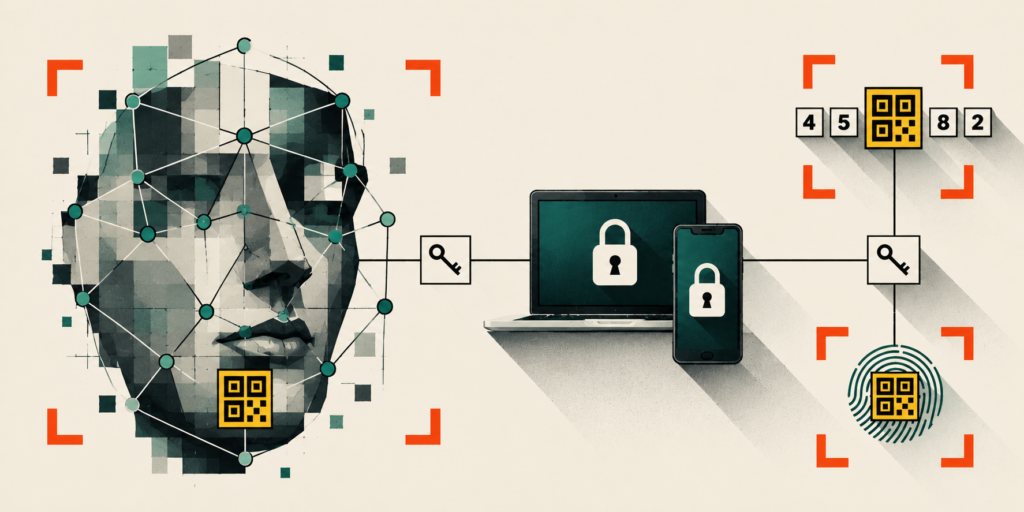
The Cybersecurity and Infrastructure Security Agency (CISA) continues to emphasize multifactor authentication (MFA) as one of the most effective methods for preventing unauthorized access to business systems. CISA specifically recommends requiring MFA across business applications and remote access systems because passwords alone are no longer sufficient protection.
When personal phones are used for work, several important questions arise:
- Does the device require biometric or passcode protection?
- Is the operating system current and supported?
- Can business data be removed if the device is lost?
- Are compromised or jailbroken devices permitted?
- Are employees using MFA consistently?
A lost smartphone that contains email access, cloud storage credentials, or client communications can create both security and compliance issues.
In healthcare environments especially, mobile device security deserves additional scrutiny. The Department of Health and Human Services (HHS) notes that personal mobile devices and applications may not provide the protections people often assume, particularly when data is stored outside regulated systems.
Mobile Apps Create Governance Challenges
Many organizations focus on securing devices while overlooking the applications employees install on them.
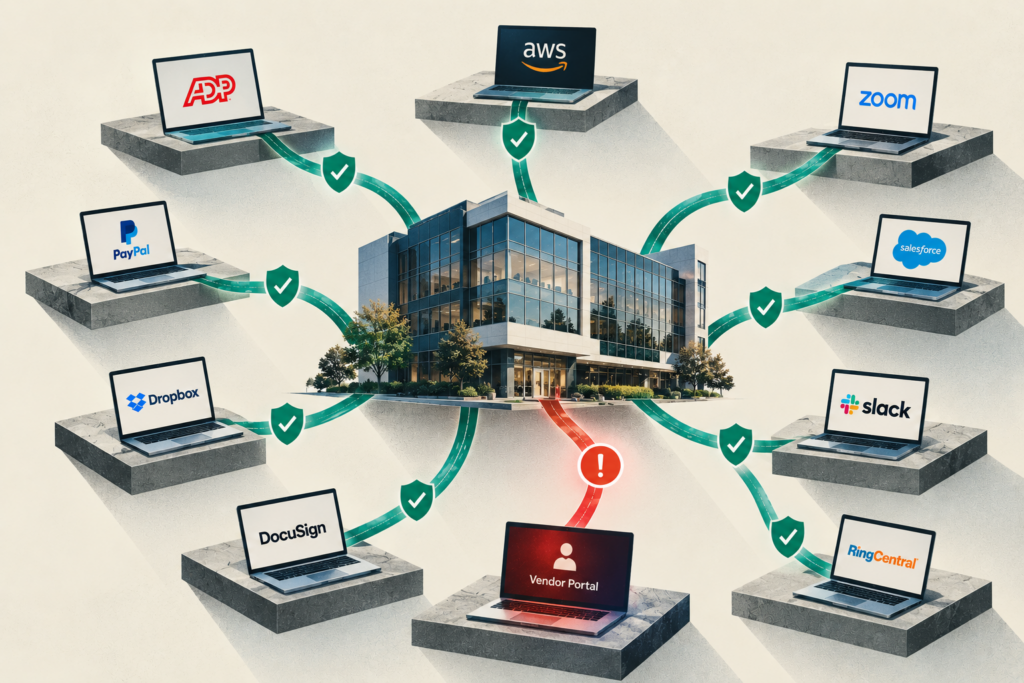
Modern mobile apps often integrate with email, cloud storage, calendars, messaging platforms, and document repositories. Employees can unknowingly create pathways for sensitive business information to move outside approved systems.
Examples include:
- File-sharing applications
- AI-powered productivity tools
- Consumer messaging platforms
- Note-taking applications
- Personal cloud storage accounts
Each app introduces its own privacy practices, data storage methods, and sharing permissions.
For healthcare organizations, this can affect protected health information. For legal practices, attorney-client communications may become exposed. For nonprofits, donor and financial data could be copied into third-party systems that were never evaluated by the organization.
The challenge is not necessarily that an application is unsafe. The challenge is that leadership may have little visibility into how business information is being handled once it enters those platforms.
Governance requires understanding which applications are permitted, which are prohibited, and how data is managed throughout its lifecycle.
Practical Steps to Reduce BYOD Compliance Risk
Most organizations do not need to eliminate personal devices entirely.
Instead, they need a structured approach that balances flexibility with accountability.
A strong BYOD policy should address:
Define Approved Business Activities
Clearly establish what employees can and cannot do on personal devices. Business expectations should be documented rather than assumed.
Establish Data Ownership Rules
Employees should understand that business information remains organizational property regardless of the device used to access it.
Implement Consistent Security Standards
Require device passwords, current operating systems, MFA, and other baseline protections for any device accessing organizational resources.
Control Mobile Applications
Develop policies governing approved applications and business data sharing practices.
Plan for Employee Transitions
Create procedures for removing organizational access when staff members leave or change roles.
Conduct Periodic Reviews
BYOD programs should be reviewed regularly as technology, compliance obligations, and organizational needs evolve.
NIST guidance specifically highlights that organizations adopting BYOD require controls that address both security and privacy concerns, since personal devices introduce risks that traditional corporate security models were not designed to manage. [nist.gov], [csrc.nist.gov]
Convenience Should Not Define Compliance
Personal phones are now part of everyday business operations. For many organizations, that reality is unlikely to change.
The question is not whether employees will use mobile devices for work. The question is whether leadership understands the compliance, retention, security, and governance implications that accompany that use.
Healthcare practices face HIPAA considerations. Law firms must account for confidentiality and records retention obligations. Nonprofits must protect donor information and maintain appropriate documentation. In every case, convenience should be supported by policy rather than replacing it.
Business leaders should view BYOD as a governance issue first and a technology issue second. A thoughtful assessment of mobile workflows, security controls, retention requirements, and employee practices can often reveal risks that have quietly accumulated over time.
At Emerald Technology Group, we help healthcare organizations, law firms, nonprofits, and other professional service organizations throughout Lane County evaluate these risks in practical business terms. By aligning mobile security, compliance support, and strategic IT planning, organizations can maintain operational flexibility while meeting the accountability standards their clients, regulators, boards, and stakeholders expect.
Frequently Asked Questions
Are text messages considered business records?
They can be. If text messages contain client communications, approvals, decisions, or information related to organizational operations, they may be subject to the same retention requirements as email or other business records. Whether those records need to be preserved depends on the organization’s regulatory, legal, and operational obligations.
What happens to company data when an employee leaves?
Without a clear offboarding process, business emails, files, contacts, and messages may remain on a former employee’s personal device. Organizations should have documented procedures for removing access, preserving records, and ensuring sensitive data remains under organizational control.
Does cyber liability insurance cover incidents involving personal phones?
Not always. Many cyber insurance policies require security controls such as multifactor authentication, device management, and documented security policies. If personal devices are used for work, organizations should review policy requirements carefully to identify any potential coverage gaps.
Can a poorly managed BYOD program affect client or donor trust?
Yes. Clients, patients, donors, and stakeholders expect organizations to handle sensitive information responsibly. Even if a compliance issue never becomes a reportable incident, weak governance around personal devices can create concerns about security, professionalism, and organizational oversight.
What to read next
Back to Blogs