Update to Oregon Data Privacy Laws
What Eugene and Springfield Businesses Need to Know About Oregon Data Privacy Laws and IT Support
Many business owners and executive directors in Eugene and Springfield still assume data privacy laws only apply to large technology companies or national brands. In reality, Oregon’s data privacy rules increasingly affect local professional service firms, nonprofits, healthcare practices, and growing small businesses, especially those that rely on cloud software and outsourced IT support. The Oregon Consumer Privacy Act has made data governance and IT oversight a leadership responsibility. For organizations with lean internal IT resources, privacy compliance now depends heavily on how systems are configured, how vendors are managed, and how IT support is structured.
This article explains what local organizations need to know about Oregon data privacy laws, how they intersect with IT systems, and why IT support plays a central role in compliance.
Why Oregon Data Privacy Is Now an IT Leadership Issue for Eugene and Springfield Organizations
Privacy compliance is no longer just a legal or HR task. For most organizations in Lane County and across the Willamette Valley, personal data lives inside email systems, file shares, CRMs, accounting platforms, donor databases, EHRs, and cloud applications. That means privacy obligations rise or fall based on IT controls. Leadership teams are increasingly expected to understand:
- Where personal data lives
- Who has access to it
- How access and deletion requests are handled
- Whether IT vendors can support compliance obligations
Without coordinated IT support, even well‑intentioned organizations struggle to meet these expectations.
Understanding Oregon Data Privacy Laws and Their Impact on Small Businesses
Oregon’s primary data privacy law is the Oregon Consumer Privacy Act (OCPA). It took effect on July 1, 2024, and expanded to include qualifying nonprofit organizations on July 1, 2025. The law gives Oregon residents clear rights over their personal data, including the right to access their data, correct inaccuracies, request deletion, and opt out of data sales and targeted advertising. The law is enforced by the Oregon Attorney General. While there is no private right of action, civil penalties can reach up to $7,500 per violation, making compliance a real operational concern.
The Oregon Consumer Privacy Act Explained for Eugene and Springfield Small Businesses
A critical detail for local leadership teams is that Oregon does not use a revenue threshold. Many organizations that would be exempt under other state privacy laws may still be covered in Oregon. The OCPA applies if an organization does business in Oregon or serves Oregon residents and, in a calendar year:
- Controls or processes personal data of 100,000 or more consumers, or
- Controls or processes data of 25,000 or more consumers and derives 25 percent or more of revenue from selling personal data
For nonprofits, associations, and service‑based businesses in Eugene and Springfield, these thresholds are more reachable than many leaders expect.
Which Organizations Are Most Likely to Be Covered
In practice, the organizations most commonly affected include:
- Nonprofits and associations with large donor or member lists
- Healthcare and behavioral health practices
- Professional service firms using CRMs and marketing platforms
- Construction, engineering, and property management firms with client portals
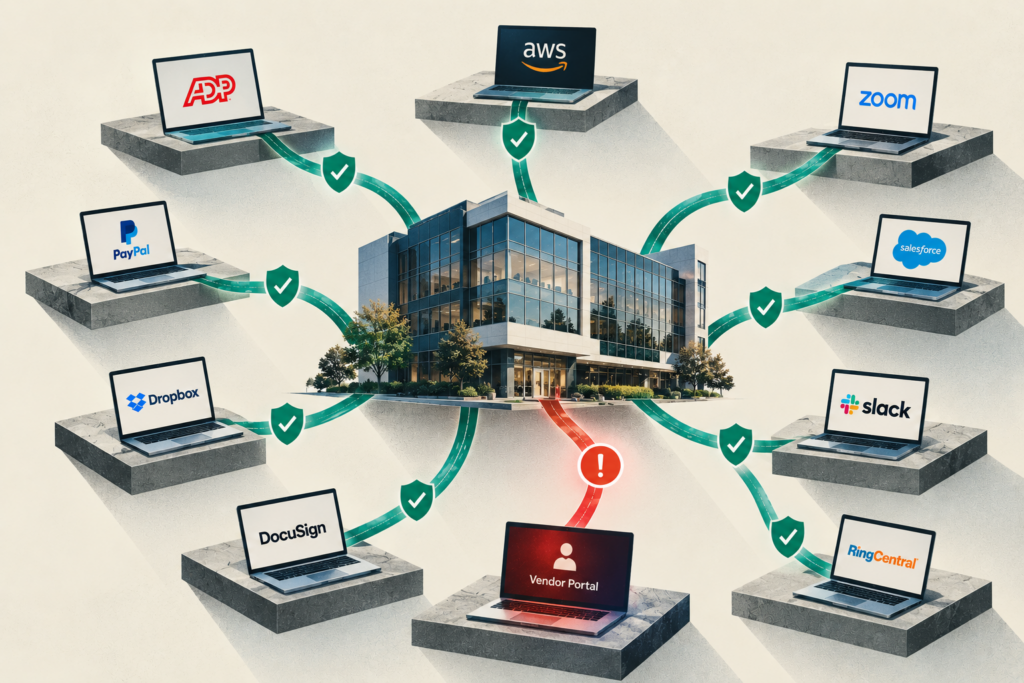
- Businesses that rely heavily on third‑party SaaS tools
If your organization relies on IT systems to manage people‑related information, privacy compliance should be assumed until proven otherwise.
Why Small Businesses Cannot Ignore Data Privacy and IT Compliance
OCPA enforcement activity shows that regulators are not focused solely on large data breaches. Many compliance issues stem from basic IT and process failures, such as:
- Privacy request forms that do not work
- Incomplete or outdated privacy notices
- Inability to locate personal data across systems
- Vendors that cannot support deletion or access requests
For smaller organizations, these failures translate into leadership distraction, operational disruption, and avoidable regulatory exposure, even without public attention.
What Counts as Personal Data Under Oregon Law
Oregon defines personal data broadly. It includes any information that can be linked to an individual, whether collected online or offline. From an IT perspective, this often includes:
- Contact and billing information
- Client, patient, or donor records
- CRM and marketing profiles
- Website analytics tied to identifiable users
- Internal notes stored in cloud platforms
This data usually spans multiple systems, which is why privacy compliance is so closely tied to IT support.
How Oregon Data Privacy Laws Affect IT Infrastructure and IT Support
Privacy compliance depends on how IT environments are designed and managed. Common risk areas include:
- Shared logins and weak access controls
- Unmanaged laptops and mobile devices
- Legacy file servers synced to the cloud
- Vendor platforms with unclear data retention practices
Strong IT support helps align technical controls with legal expectations, reducing both privacy and cybersecurity risk.
Common IT and Compliance Gaps Seen in Eugene and Springfield Organizations
Across Eugene, Springfield, and the broader Willamette Valley, recurring gaps include:
- No centralized inventory of personal data
- No clear ownership for privacy requests
- Vendors not contractually obligated to support compliance
- IT documentation that does not reflect how systems are actually used
These gaps are rarely intentional. They are the result of growth, staff turnover, and fragmented IT oversight.
The Role of IT Support in Meeting Oregon Consumer Privacy Act Requirements
For most small and midsize organizations, compliance is unrealistic without structured IT support. Managed IT services can help by:
- Mapping where personal data lives
- Configuring systems to limit unnecessary access
- Supporting secure deletion and retention practices
- Coordinating vendor and cloud platform compliance
- Ensuring privacy request workflows actually function
This turns privacy compliance from a reactive burden into a manageable operational process.
Oregon Attorney General Enforcement and What It Means for Local Businesses in 2026
The Oregon Attorney General initially emphasized education and cure periods. As of January 1, 2026, the mandatory cure period has expired, allowing enforcement actions to proceed without advance notice in some cases.
For leadership teams, this raises the importance of proactive IT and compliance alignment rather than last‑minute remediation.
Practical IT and Data Privacy Steps for Eugene and Springfield Small Businesses
- Inventory personal data across IT systems
- Review privacy notices and website forms
- Confirm vendors can support privacy rights requests
- Strengthen access controls and device management
- Assign leadership accountability for privacy and IT oversight
These steps are achievable with the right IT support model.
Why Data Privacy Should Be Part of Your IT Strategy
Oregon data privacy law is now a permanent part of the operating environment. The goal is not perfection, but reasonable diligence supported by reliable IT systems and processes. Organizations that treat privacy as an extension of IT governance are better positioned to protect client trust, maintain insurance coverage, and avoid unnecessary disruption.
A steady, advisory approach with a trusted IT support partner can make privacy compliance far more manageable and far less stressful.
What to read next
Back to Blogs