Endpoint Security: Why Every Device Is Your Biggest Cyber Risk
Endpoint Security Is Now the Front Line of Cyber Risk
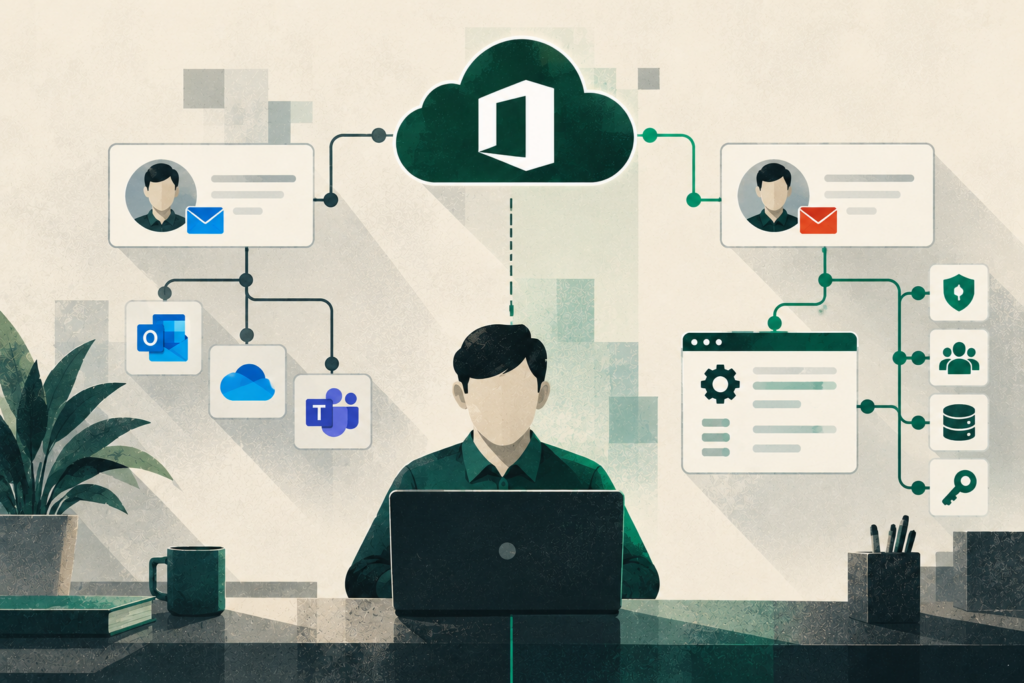
For most organizations, cybersecurity strategy still centers on the network perimeter, including firewalls, email filters, and access controls. But modern attacks have shifted the point of failure. The weakest and most targeted part of your environment is now the endpoint. Every laptop, phone, server, or remote workstation that connects to your systems is a potential entry point. In a hybrid, cloud-enabled workforce, those entry points are everywhere.
An endpoint is any device that accesses company data or connects to your network, including laptops, desktops, mobile devices, servers, and home office systems. These are not just operational tools. They are the primary way attackers get in. Attackers rarely breach hardened infrastructure directly. Instead, they rely on predictable pathways:
- Phishing emails that prompt users to click malicious links
- Compromised credentials used to access devices
- Malicious downloads and unpatched software vulnerabilities
According to IBM’s Cost of a Data Breach Report, phishing and credential theft remain among the most common initial access methods.
What Endpoint Protection Actually Does
Endpoint protection is a layered system that secures devices directly, not just the network around them. Its purpose is continuous visibility and control at the device level. Modern solutions are designed to:
- Detect threats using both signatures and behavioral patterns
- Block malicious activity before it executes
- Monitor device activity continuously
- Respond in real time, often isolating compromised systems
This marks a shift from traditional antivirus, which relies on known threat signatures and struggles against modern techniques like fileless malware and ransomware. Today’s endpoint protection typically combines antivirus as a baseline with Endpoint Detection and Response (EDR), which identifies suspicious behavior rather than just known threats. It is reinforced by patch management to close vulnerabilities, device controls to limit external media, and centralized monitoring to surface anomalies early.
Why Endpoint Risk Has Become Business Risk
- Most breaches start at the endpoint because users and devices are the easiest way in
- Antivirus alone is outdated, as modern threats evade signature-based detection
- Ransomware creates operational disruption, often spreading from a single device
- Remote work expands exposure, with devices operating outside secure networks
Endpoints also store and access sensitive data, meaning a single compromised device can expose client records, financial information, and internal systems. At the same time, regulatory expectations continue to evolve, with many industries requiring endpoint-level controls.
What Happens When Endpoint Protection Falls Short
Organizations without effective endpoint protection typically face limited visibility into threats, slower response times, increased downtime, and higher recovery costs. Small gaps escalate into larger incidents because threats are neither detected early nor contained quickly. This gap is often reinforced by outdated assumptions. Many organizations still believe antivirus is sufficient, that they are too small to be targeted, or that firewalls provide complete protection. In reality, attackers depend on these beliefs.
What Effective Endpoint Security Looks Like Now
- Real-time monitoring across the environment
- Behavior-based detection to identify unknown threats
- Automated response, including device isolation
- Centralized visibility and management
- Consistent patching and updates
This is not about adding more tools. It is about ensuring every device is actively secured within a unified system.
Why User Behavior Is Still the Weakest Link
Even with strong endpoint protection in place, most attacks still begin with a user action. Phishing remains one of the most effective and widely used methods because it targets human behavior rather than technical vulnerabilities. Organizations are increasingly addressing this gap through structured phishing awareness and simulation programs. These programs are designed not just to educate employees, but to actively train behavior over time. A typical phishing training program includes:
- Simulated phishing campaigns that send realistic test emails to employees
- Behavior tracking to identify who clicks, submits credentials, or reports the email
- Immediate feedback and training for users who fall for simulations
- Ongoing education modules that reinforce recognition of suspicious emails
- Reporting tools that make it easy for employees to flag potential threats
Over time, this approach creates measurable improvement. Employees become more likely to recognize and report phishing attempts, reducing the likelihood that a single mistake leads to a breach. The key insight is that awareness alone is not enough. Effective programs rely on repetition, real-world simulation, and continuous reinforcement. Much like endpoint protection evolved beyond simple antivirus, security training must move beyond one-time sessions to continuous behavioral conditioning.
Extending Endpoint Security Through Training
Endpoint protection secures the device. Phishing training secures the user. Organizations that combine both gain a meaningful advantage:
- Fewer successful initial attack attempts
- Faster reporting of suspicious activity
- Reduced dwell time for attackers
We help organizations implement and manage these phishing training programs as part of a broader security strategy. This includes designing realistic simulations, tracking user risk levels, and continuously improving employee response over time. Because in practice, the difference between a blocked attack and a successful breach often comes down to a single click.
Every Device Is a Potential Point of Failure
Every employee device is part of your security perimeter and potentially your most exposed asset. If endpoints are not actively monitored and secured, other defenses lose effectiveness quickly. Endpoint protection is no longer optional. It is a foundational control that determines whether an incident is contained early or escalates into a broader business disruption.
Where to Act First
Do you have real-time visibility and response capability on every device that accesses your data? If the answer is no or uncertain, focus on:
- Deploying EDR across all endpoints
- Establishing centralized monitoring and alerting
- Automating containment where possible
- Enforcing consistent patch management
The organizations that move on these priorities reduce not just technical risk, but operational and financial exposure.
What to read next
Back to Blogs