Why Your Business Needs a Technology Review
Your IT Provider Fixes Problems All Year. But Who Is Planning What Comes Next?
Most business leaders know when IT support is working. Employees can get help. Computers stay operational. Email works. Problems are resolved without consuming the owner’s day.
But support activity answers only one part of the technology question.
It tells you what needed attention today. It does not necessarily tell you which systems are approaching the end of their useful life, which risks deserve leadership attention, what the organization should budget for next year, or whether technology still supports the way the business operates.
That requires a different conversation.
A recurring technology review gives owners, executive directors, finance leaders, and operations leaders a chance to step away from individual support requests and look at the environment as a whole. The purpose is not to fill a meeting with technical reports. It is to create visibility into upcoming decisions while there is still time to make those decisions thoughtfully.
Key Takeaways
- IT support resolves current problems. Technology planning prepares the organization for future decisions.
- A useful review starts with what has changed in the organization, not with a predetermined list of products.
- Aging equipment, renewals, security gaps, cloud projects, staffing changes, and business priorities should be considered together.
- The goal is not to complete every recommendation immediately. It is to identify priorities, timing, dependencies, and budget implications.
- Whether the conversation happens quarterly or yearly matters less than having a recurring planning process.
IT Support and Technology Planning Are Different Things
IT support keeps the organization operating. Technology planning helps leadership decide what should happen next.
Support tickets are important because they reveal immediate problems: an employee cannot sign in, a printer has stopped working, an application is unavailable, or a laptop needs attention. Those requests provide useful operational data, but they rarely show the complete direction of the organization.
A ticket does not necessarily explain that a business expects to open another location, reduce seasonal staffing, change accounting platforms, retire a server, move more work into Microsoft 365, or operate under a tighter budget next year.
Those changes can alter what technology the organization needs.
A good technology review connects day-to-day support with the larger business picture. It asks whether the current environment still fits the organization and what decisions are approaching before they turn into urgent projects.
A Useful Review Begins With What Has Changed
The first question should not be, “What technology should we sell or replace?” It should be, “What has changed since we last had this conversation?”
That may include:
- New or departing employees
- Changes in staffing levels or seasonal demand
- Additional offices, properties, or work sites
- New cloud applications or business systems
- Changes to financial, operational, or client-service processes
- New security or insurance expectations
- Equipment that is no longer needed
- Changes in the organization’s budget or strategic priorities
These details matter because technology should follow the organization, not force the organization into a static plan.
In one review, for example, the initial equipment forecast suggested a substantial number of future computer replacements. The conversation revealed that staffing levels were still changing and that the organization already had usable computers in storage. Instead of treating the original forecast as a purchase order, the next step became validating the real user count, consolidating equipment, and redeploying newer devices before recommending additional purchases.
That is the value of planning. The review did not create a larger project. It helped the client avoid making a premature decision.
Technology Decisions Usually Have Dependencies
A technology initiative can make sense strategically and still be the wrong project to begin immediately.
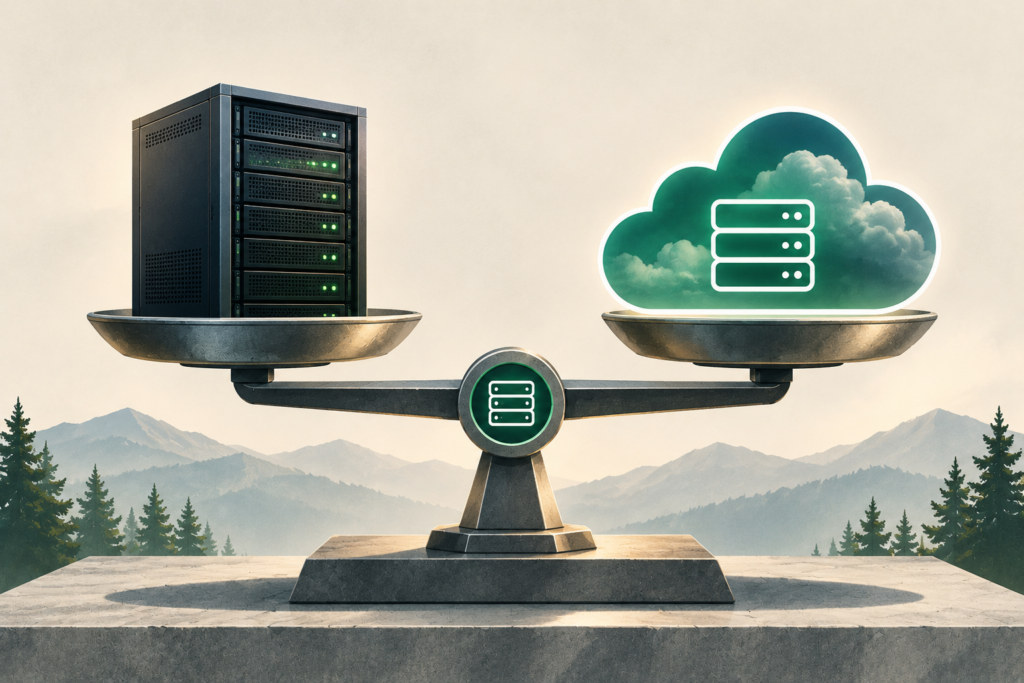
A move from an onsite server to cloud-based file storage may depend on internet capacity, application requirements, data-retention decisions, user workflows, and available budget. A new office may require more than computers. Connectivity, phones, wireless coverage, printing, security, and vendor coordination may all affect the timing.
We have seen reviews uncover foundational dependencies that could have blocked otherwise sensible modernization work. In one case, the organization’s available internet performance needed to be addressed before a larger cloud migration could proceed reliably. Instead of pushing the project forward and dealing with the limitation later, the review made connectivity part of the roadmap.
In another review, a planned server retirement could not be scoped responsibly until the client confirmed what historical information still needed to remain available in an older business application. The right next step was not “remove the server.” It was “resolve the business dependency, then plan the transition.”
This is an important leadership distinction: an item can be strategically correct without being operationally ready.
What Is Approaching a Decision Point?
Every organization has technology moving toward a decision point, even when nothing is currently broken.
Computers are the most familiar example. A device can continue turning on while becoming slower, less reliable, more difficult to support, or less appropriate for the employee’s work. The leadership question is not simply whether a computer still functions. It is whether keeping it in service remains the right operational and financial decision.
The same principle applies to:
- Hardware and software renewals
- Firewalls and network equipment
- Physical servers
- Microsoft 365 licensing
- Telephone and conferencing systems
- Backup services
- Internet connections
- Shared accounts and outdated access practices
- Line-of-business applications
- Security awareness and password-management programs
A technology review creates a place to identify these decision points in advance. It may lead to replacement, but it may also lead to consolidation, redeployment, a pilot program, a revised configuration, or a deliberate decision to wait.
In reviews with other organizations, Emerald Technology Group has helped smooth projected computer purchases across multiple budget years instead of allowing several large replacement years to accumulate. We have also helped clients distinguish between office equipment with heavier business demands and devices used for more limited workflows, rather than applying one replacement rule to every machine.
The objective is not to replace technology more aggressively. It is to make better-timed decisions.
Which Risks Deserve Leadership’s Attention?
A technology review should not bury business leaders in a long list of technical findings. It should translate findings into decisions.
For each meaningful issue, leadership should be able to understand:
- What is the concern?
- Why does it matter to the organization?
- What could happen if nothing changes?
- Does action need to happen now, later, or only if another condition changes?
- What decision or resource is needed from leadership?
Not every finding deserves a project. Some issues can be resolved through routine configuration, cleanup, patching, or administrative work. Other items require budget, a policy decision, coordination with another vendor, or acceptance of a known risk.
One review, for instance, separated remediation work that the IT team could handle through ongoing service from issues that would require a third party or a change outside the existing scope. That distinction prevented leadership from receiving an undifferentiated list of “security problems” and instead clarified where business involvement was actually necessary.
The review’s value is not the volume of findings. It is the quality of the prioritization.
Technology Planning Is Also Financial Planning
The strongest technology reviews connect upcoming decisions with the organization’s financial reality.
A roadmap can show which expenses are likely to be recurring, which initiatives are optional, which projects have dependencies, and which replacements can be phased. It can also distinguish a budget estimate from an approved project.
That helps leadership prepare for items such as:
- Computer replacements
- Licensing renewals
- Security improvements
- Network upgrades
- Cloud migrations
- Office expansions
- Application changes
- Consulting and implementation work
We have worked through reviews where the responsible outcome was to delay lower-priority improvements during a financially cautious year while keeping foundational modernization and higher-priority security work visible. We have also adjusted project timing to fit the client’s budgeting process rather than treating the technology schedule as independent of financial planning.
In other cases, the review has helped move computer replacements forward or backward within a reasonable range to reduce sharp peaks and valleys in projected spending.
A roadmap does not eliminate technology expenses. It makes those expenses easier to see, discuss, and sequence.
A Review Should Sometimes Lead to “Not Yet”
One sign of a valuable technology advisor is the ability to recommend sequencing instead of treating every opportunity as an immediate project.
During client reviews, we have helped organizations:
- Use available equipment before buying more
- Start with a small group before considering an organization-wide rollout
- Prioritize employee security training before adding another security initiative
- Delay a larger cloud project until application dependencies were understood
- Test internet service at individual locations before changing providers broadly
- Simplify a proposed migration rather than designing the most complex possible environment upfront
For example, one client was interested in improving file access and eventually using AI to help employees find internal policies and procedures. Rather than recommending a large, organization-wide deployment, the discussion focused on first establishing the right cloud foundation and then using a small pilot group with a defined use case.
“Not yet” is not inaction when it comes with a clear dependency, priority, or next review point. It is often responsible planning.
Quarterly Versus Yearly Is Not the Main Question
Some organizations benefit from quarterly technology reviews. Others may need a deeper annual review with shorter check-ins between planning cycles.
The right cadence depends on factors such as:
- Organizational growth
- Number of locations
- Volume of upcoming projects
- Rate of technology change
- Regulatory or security needs
- Budgeting cycles
- The number of decisions waiting on leadership
What matters most is that the conversation recurs.
In one client relationship, additional touchpoints were added between annual reviews because both organizations saw value in preventing projects, quotes, and decisions from becoming stuck. In another, the client explicitly confirmed that the quarterly cadence was valuable and adjusted the schedule to better fit its operational calendar.
A recurring review provides accountability. Items can be revisited, assumptions can be updated, and deferred decisions can come back into view when conditions change.
The Real Goal Is Fewer Technology Surprises
A successful technology review does not produce the longest report. It produces clearer decisions.
Leadership should leave the conversation understanding:
- What has changed
- What is working well
- Which decisions are approaching
- Which risks require attention
- What should be budgeted
- What can wait
- Who owns the next step
- When the topic will be reviewed again
That visibility is the real outcome.
The leadership blind spot is assuming that a quiet help desk means the technology environment is fully aligned with the organization. Low ticket volume may indicate stable support, but it does not answer whether equipment is aging, a renewal is approaching, a cloud initiative has an unresolved dependency, or the business has changed faster than its technology plan.
Reliable support keeps the day moving. Recurring planning makes the next year more predictable.
Frequently Asked Questions
What is a quarterly technology review?
A quarterly technology review is a recurring conversation between business leadership and its technology advisor. It evaluates organizational changes, upcoming decisions, risks, projects, renewals, and budget priorities rather than focusing only on support tickets.
Is a technology review the same as a support report?
No. A support report usually summarizes operational activity such as ticket volume or response performance. A technology review uses operational information as one input in a broader planning discussion.
Does every organization need a review every quarter?
No. The appropriate cadence depends on the organization’s size, rate of change, locations, active projects, risks, and budgeting process. The essential element is a recurring process with clear follow-up.
Who should attend?
The meeting should include a person who understands the technology environment and a business leader who can speak to priorities, operations, and budget. Depending on the organization, that may be an owner, executive director, CFO, controller, operations leader, or office manager.
Should every review produce a new IT project?
No. A valuable review may result in a purchase, but it may also lead to consolidation, further research, a pilot, a deferred decision, a policy change, or confirmation that the current environment remains appropriate.
How should technology risks be presented to leadership?
Risks should be explained in business terms: what matters, why it matters, the likely consequence, the timing, and the decision required. Technical detail should support the conversation, not obscure it.
What should we bring to a technology planning conversation?
Bring information about expected staffing changes, locations, business applications, operational priorities, financial constraints, vendor changes, known frustrations, and major initiatives. That context helps the technology plan reflect the organization’s actual direction.
Start With the Decisions You Cannot Clearly See
Review your organization’s next 12 to 24 months and ask whether leadership can clearly identify the major technology decisions likely to arise. Look at staffing, equipment, applications, security priorities, locations, renewals, and planned operational changes.
Emerald Technology Group helps organizations turn that information into a practical technology roadmap. We evaluate the current environment, identify dependencies, translate technical findings into business decisions, and help leadership sequence investments around real priorities and budget constraints.
If your organization mostly discusses technology when something breaks, schedule an IT strategy conversation with Emerald Technology Group. The first goal is not to create a list of projects. It is to understand what is coming and reduce the chance that the next important technology decision becomes a surprise.
What to read next
Back to Blogs